Hot Water
How to Choose the Right Hot Water System
Buying a new hot water system is a decision you make once every decade or so, and it affects your energy bills every single day in between. With electric, gas, solar and heat pump options all competing for your money, it's easy to
- 4.8 Stars on Google
- $0 Call-Out Fee
- Same-Day Service
- Licensed & Insured

Buying a new hot water system is a decision you make once every decade or so, and it affects your energy bills every single day in between. With electric, gas, solar and heat pump options all competing for your money, it's easy to feel stuck. This guide breaks down the four main types, what they cost to run, and which suits different Melbourne homes.
What are the four main types?
| System type | How it works and who it suits |
|---|---|
| 1. Electric storage | A tank heated by an electric element. Cheapest to buy and simple to install, but generally the most expensive to run on standard tariffs (cheaper on off-peak). A reliable, low-cost-upfront choice for smaller households or as a straight replacement, though running costs add up over the years. |
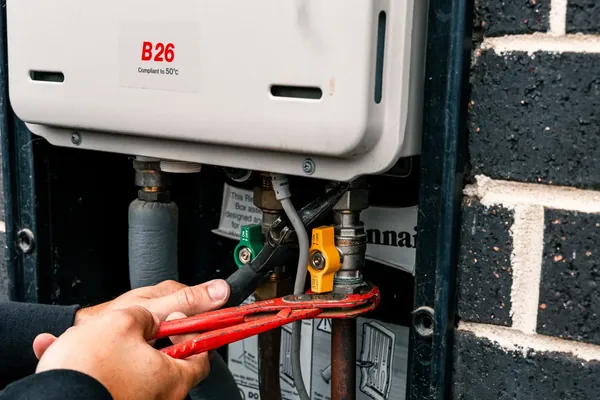
| 2. Gas storage and continuous flow | Gas heats water either in a storage tank or on demand (continuous flow / instantaneous, which heats water only as you use it and never runs out). Gas is often cheaper to run than standard electric, and continuous flow saves space and avoids the "ran out of hot water" problem. A strong option for homes already connected to natural gas. |
| 3. Solar hot water | Roof-mounted solar collectors heat the water, with electric or gas boosting for cloudy days. Higher upfront cost, but very low running costs and a smaller carbon footprint. Best for homes with good, unshaded north-facing roof space and higher hot water use. Government rebates can offset the initial outlay. |
| 4. Heat pump | The efficient newcomer. A heat pump works like a reverse air conditioner, drawing warmth from the surrounding air to heat the water using a fraction of the electricity of a standard electric element. Higher upfront cost, but very low running costs, and it qualifies for rebates. Increasingly the go-to energy-efficient electric option, especially as homes move away from gas. |
How do you choose the right one?
- What are you connected to? No natural gas connection makes electric, heat pump or solar the practical choices.
- How much hot water do you use? Bigger households need bigger storage or continuous flow to avoid running out. Size matters, too small and you run cold, too big and you pay to heat water you don't use.
- Upfront budget vs running cost. Electric storage is cheap now, dearer over time. Heat pump and solar cost more now, far less to run. Think about the total cost over the system's life, not just the sticker price.
- Space and location. Continuous flow gas units are compact and wall-mounted. Solar needs suitable roof space. Heat pumps need airflow and can be a little noisy, so placement matters.
- Rebates. Heat pump and solar systems often attract government incentives that significantly narrow the upfront gap, worth factoring in.
- Long-term plans. With the shift towards electrification, many homeowners replacing an old gas or electric unit are moving to heat pumps.
A quick guide by household
| Your situation | What usually fits best |
|---|---|
| Small household, tight budget, straight swap | electric storage or continuous flow gas (if connected). |
| Family that keeps running out of hot water | continuous flow gas or a larger storage/heat pump unit. |
| Focused on low bills and lower emissions, longer horizon | heat pump or solar. |
| Good north-facing roof, high usage | solar with boosting. |
What suits a Bayside home best?
Bayside homes range from compact heritage cottages to large family properties, and the right system varies just as much. In older Brighton or Hampton homes with limited external space, a compact continuous flow unit can be ideal; larger Beaumaris or Black Rock family homes often benefit from a heat pump or solar setup that tames running costs. One local consideration: the salt-laden bay air can be harder on external units and fittings, so quality installation and placement matter. We'll assess your home, connection, usage and budget, and recommend the system that genuinely fits, not just the one we happen to stock.
Want it looked at by a local plumber?
Not sure which system is right for your home? We supply and install all types, electric, gas, solar and heat pump, and give honest, needs-based advice.
Explore our hot water systems, or call 0468 279 958, $0 call-out fee, $200 off hot water upgrades, and interest-free plans available.
Good to know
Frequently Asked Questions: How to Choose the Right Hot Water System
Which hot water system is cheapest to run?
Heat pumps and solar generally have the lowest running costs, though they cost more upfront. Standard electric storage is usually the most expensive to run day to day.
Should I switch from gas to a heat pump?
Many homeowners are, thanks to low running costs and available rebates. Whether it's right for you depends on your space, budget and usage. We'll advise based on your specific home.
What size hot water system do I need?
It depends on household size and usage. Too small and you'll run out; too large and you'll pay to heat water you don't use. We size it correctly for your household.
Are there rebates for efficient hot water systems?
Heat pump and solar systems often qualify for government incentives that reduce the upfront cost. We can point you to what's currently available. ---
Keep reading